

Symptoms of Heat-Related Illness: Heatstroke Warning Signs to Watch for Before Dizziness and Vomiting
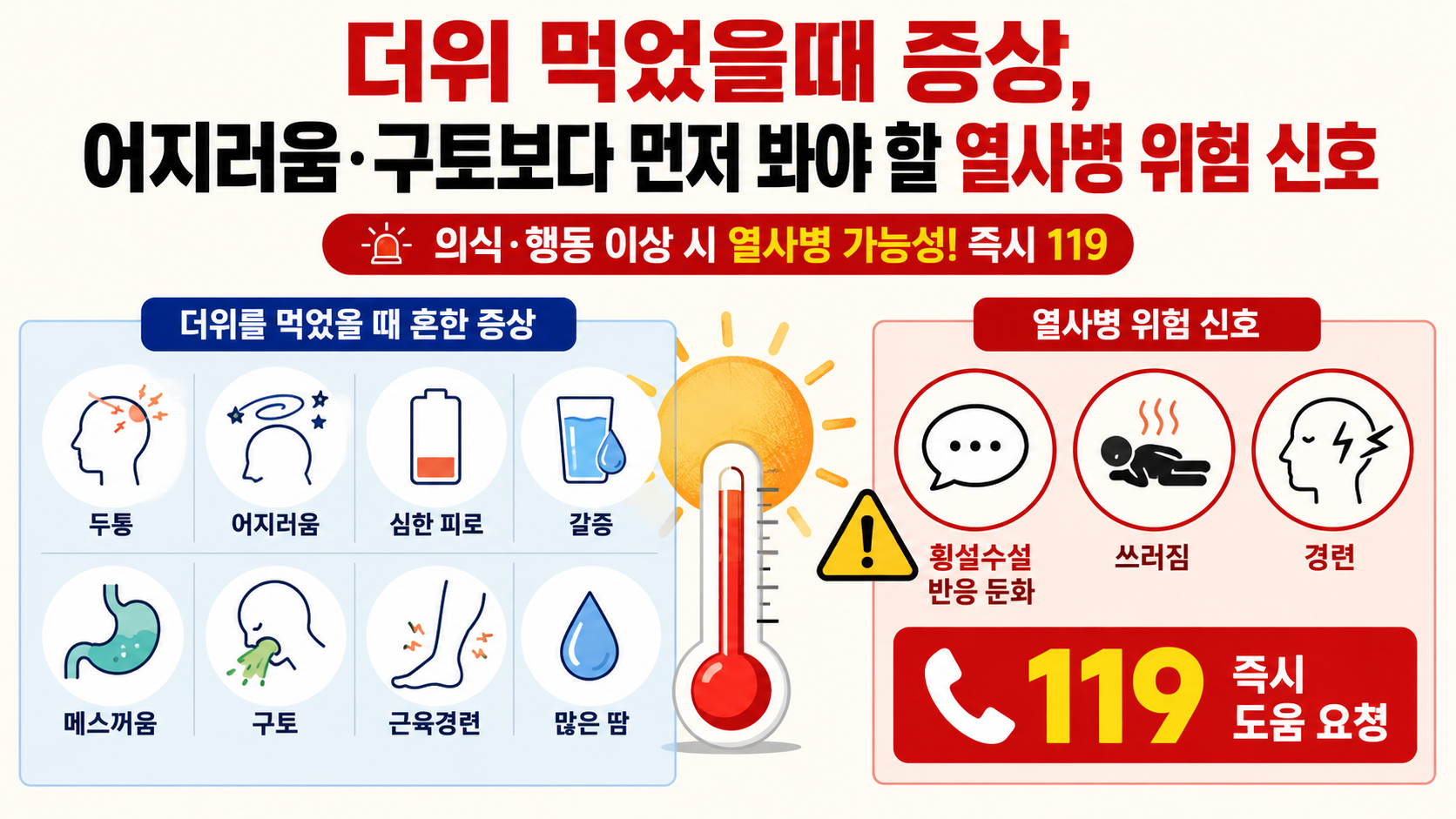
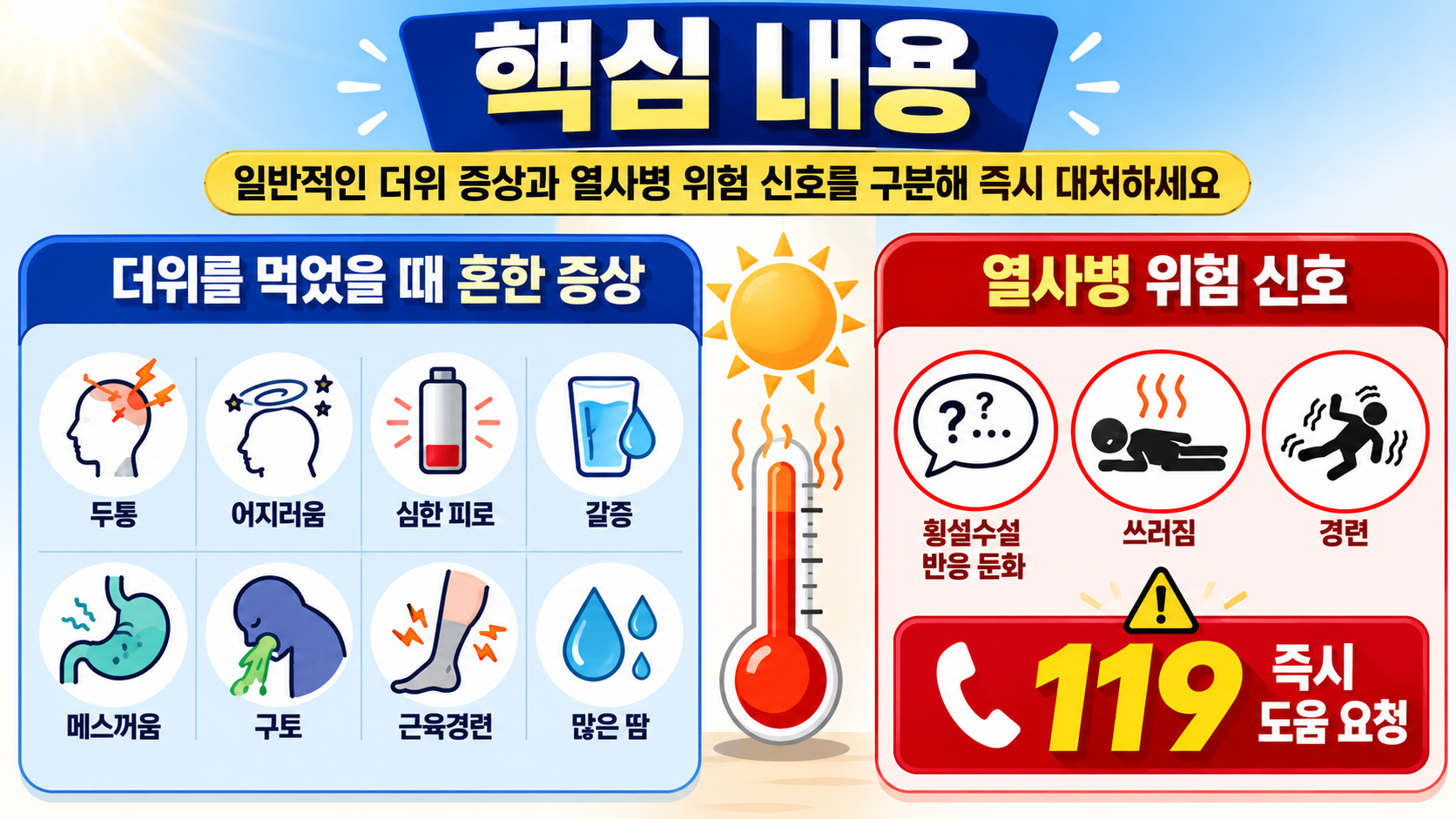
Common symptoms of heat-related illness include headaches, dizziness, severe fatigue, thirst, nausea, vomiting, muscle cramps, and heavy sweating. However, if someone becomes confused, responds slowly, collapses, has seizures, or shows other changes in consciousness or behavior, heatstroke should be suspected rather than ordinary heat-related discomfort, and help should be requested immediately from 119.
What Are the Most Common Symptoms of Heat-Related Illness?
The everyday expression 'being overcome by the heat' is not a specific medical diagnosis. Instead, it is often used to describe a range of heat-related illnesses and symptoms that develop after exposure to hot environments.
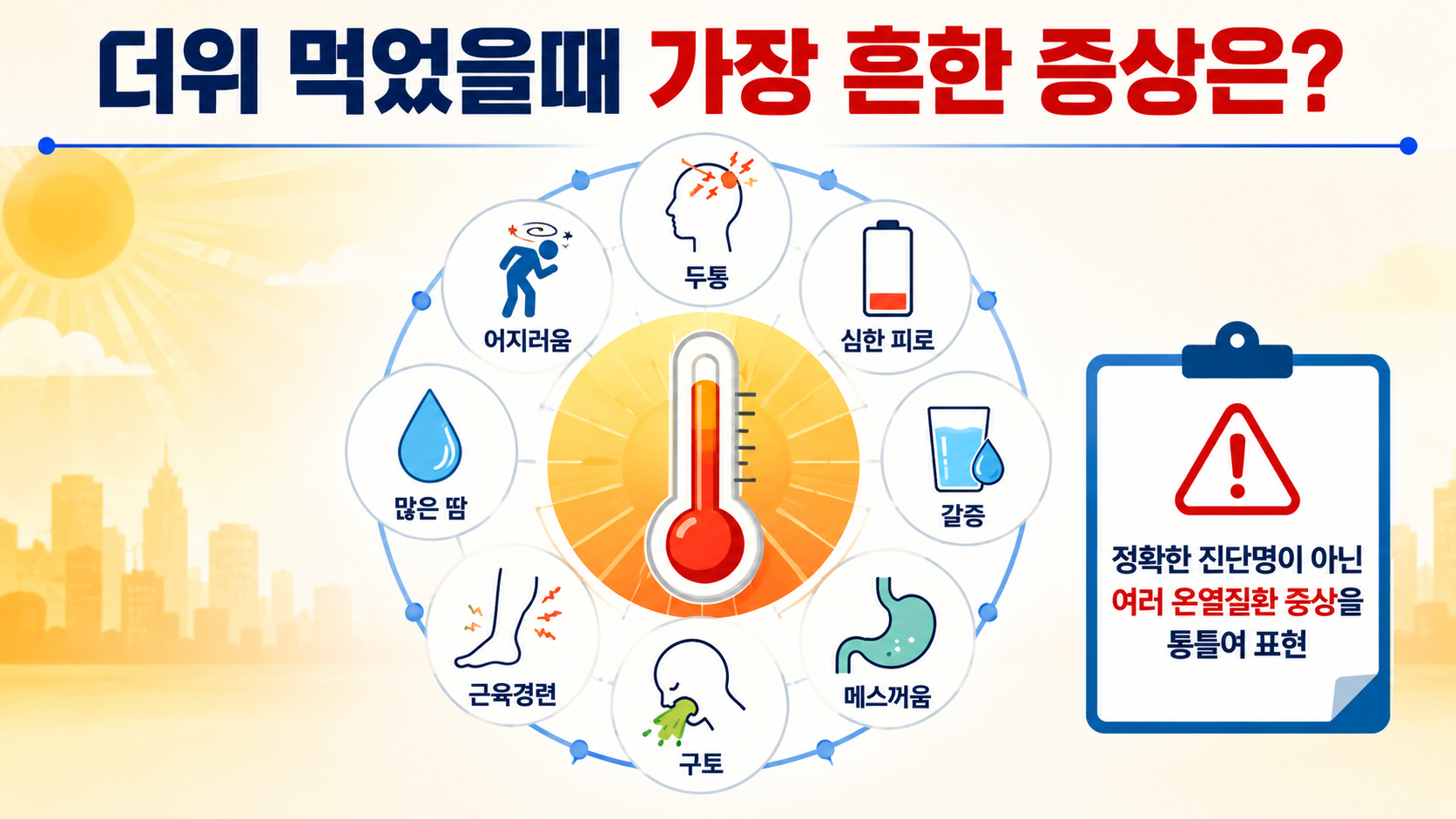
One relatively common condition is heat exhaustion. It can occur when the body loses too much water and salt through heavy sweating.
Possible symptoms include:
Sweating more heavily than usual
Headaches or dizziness
Weakness and lack of energy
Intense thirst
Nausea or feeling like vomiting
Actual vomiting
Muscle cramps in the calves, thighs, or other areas
Pale, clammy skin
Body temperature may rise during heat exhaustion, but the severe hyperthermia and pronounced central nervous system abnormalities associated with heatstroke are not typically present.
If these symptoms begin after working or exercising in a hot environment for an extended period, it is particularly important to consider the possibility of heat-related illness.
What Is the Difference Between Heat Exhaustion and Heatstroke?
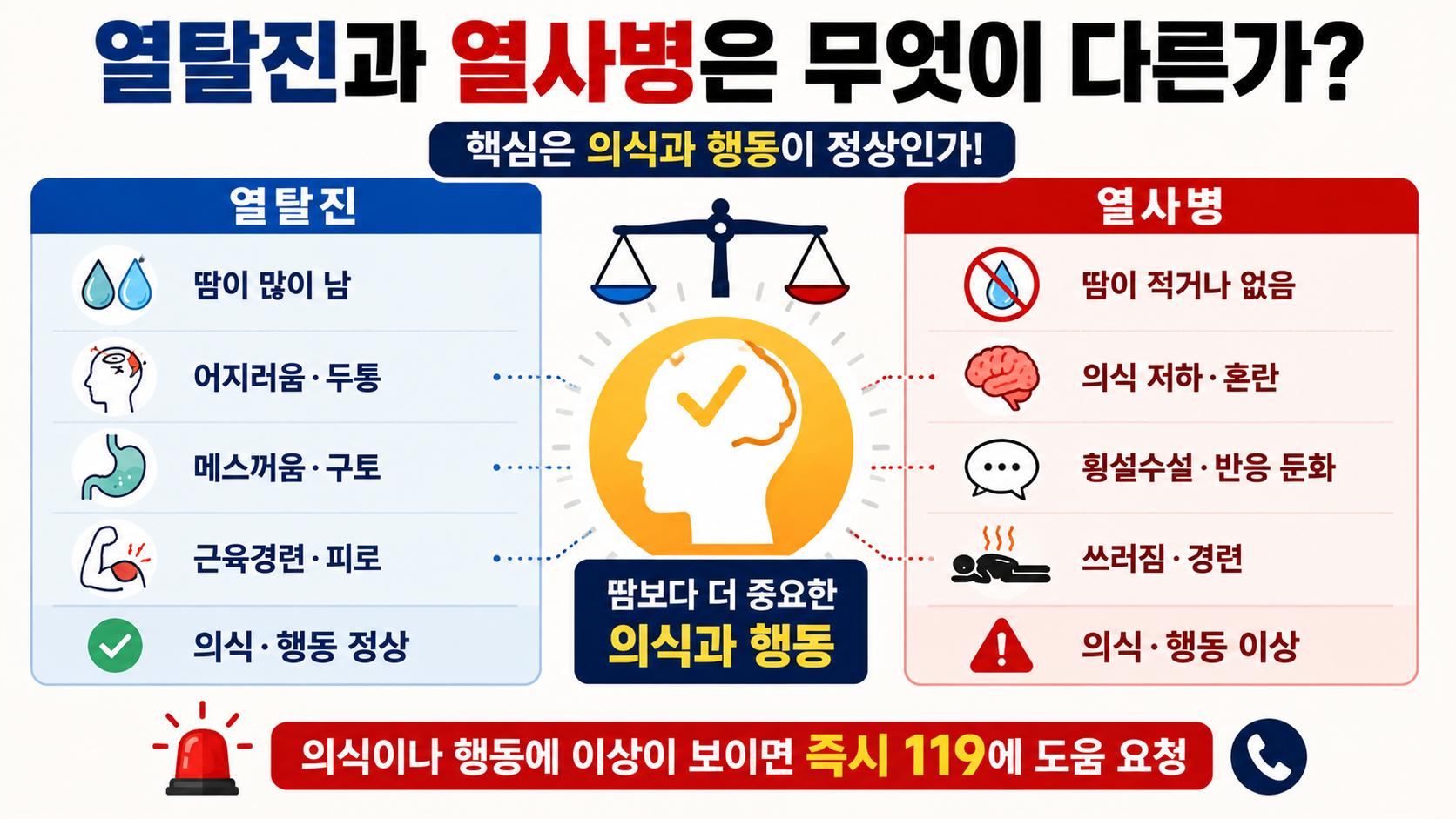
The most important question is not simply whether someone is sweating, but whether their consciousness and behavior are normal.
People experiencing heat exhaustion often sweat heavily, feel dizzy, and become weak, but they generally remain conscious.
Heatstroke, on the other hand, is a medical emergency in which the body's temperature-regulation system becomes severely impaired. It can cause central nervous system abnormalities such as reduced consciousness, confusion, unusual behavior, slurred speech, seizures, and fainting.
In heatstroke, core body temperature can rise to 40°C or higher. However, you should not waste time trying to measure an accurate core body temperature at home.
If someone suddenly becomes confused, cannot answer questions properly, staggers, or loses consciousness, the safest approach is to respond as though they may have heatstroke without waiting for a temperature reading.
There is another important point to remember.
It is easy to assume that people with heatstroke never sweat, but this is not always true. In classic heatstroke caused by hot weather, the skin may be hot and dry. However, people experiencing heatstroke associated with strenuous exercise may still sweat heavily.
Therefore, sweating alone must not be used to rule out heatstroke.
What to Do Immediately If You Feel Dizzy From the Heat
If someone is fully conscious and appears to have relatively mild symptoms of heat exhaustion, the first step is to stop the activity immediately.
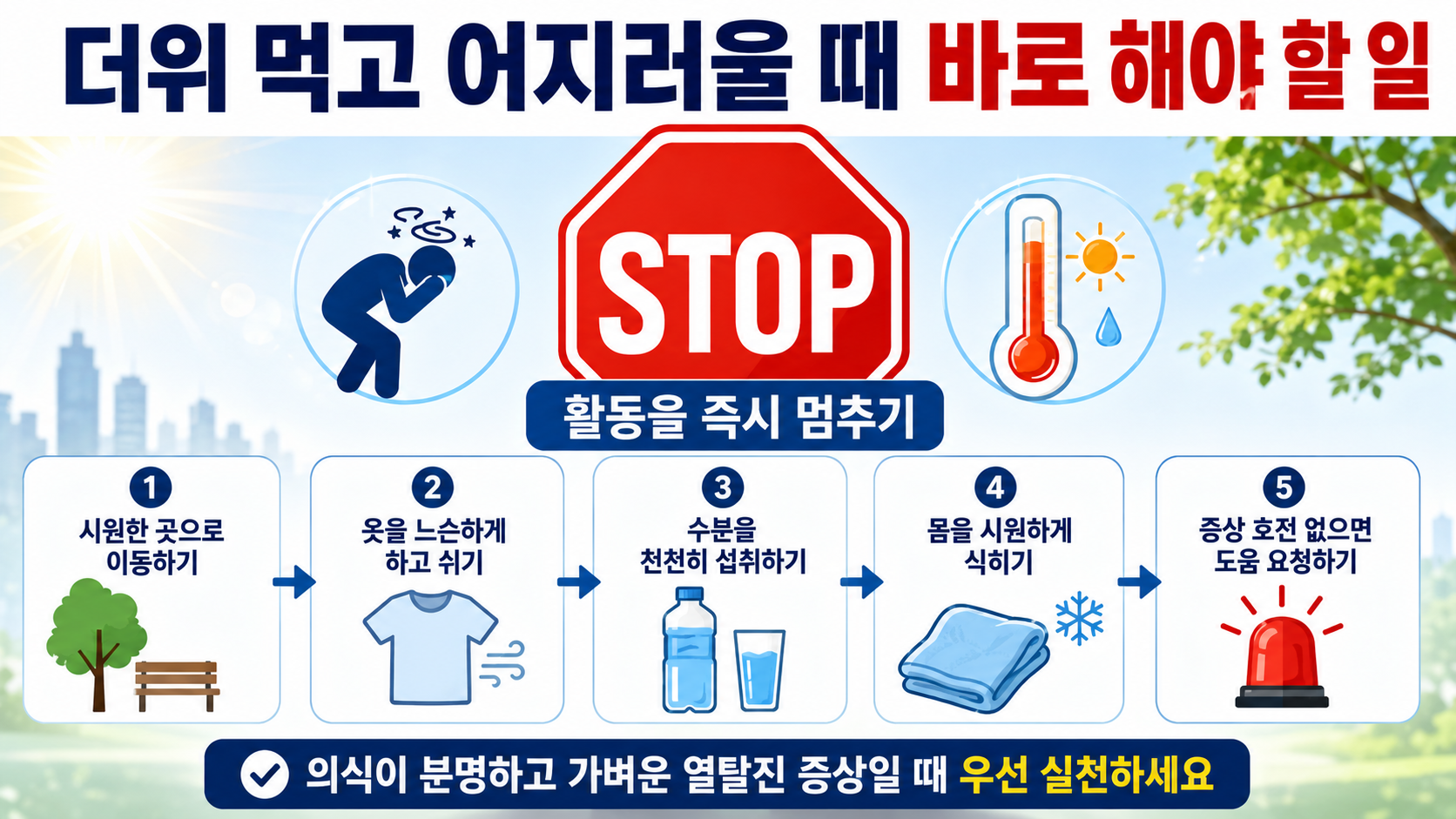
Move to a cool location, such as an air-conditioned room or a shaded area. Loosen tight clothing and remove unnecessary outer layers so the body can release heat more effectively.
Cool areas around the neck and armpits, and use a fan or handheld fan to help lower body temperature.
If the person is awake and can swallow safely, they can gradually replenish fluids by drinking small amounts of water. If they have been sweating heavily, a beverage containing appropriate electrolytes may also be an option.
However, there is no need to force someone to drink a large amount at once.
In particular, avoid giving water to anyone who has impaired consciousness, is vomiting, or cannot swallow properly. This is because fluid could enter the airway.
When Should You Call 119?
The warning signs that should never be dismissed with the assumption that 'a little rest will make everything better' are relatively clear.
If someone who has been in a hot environment suddenly becomes confused, behaves unusually, develops slurred speech, collapses, experiences seizures, or loses consciousness, immediately call 119.
You should also be concerned if the person's body temperature appears extremely high or their skin feels hot.
While waiting for 119, move the person to the coolest available location, loosen their clothing, and actively cool their body.
Heatstroke is not simply dehydration. It is a medical emergency that can damage the brain and multiple organs, so giving someone water and allowing them to rest is not sufficient treatment.
What If You Still Feel Unwell After Resting?
Even if the symptoms appear to be caused by heat exhaustion, medical evaluation is recommended if the person's condition does not improve after resting and cooling down in a cool environment, or if it becomes worse.
The same applies when persistent vomiting makes drinking water difficult or when severe dizziness and weakness continue.
Older adults, children, pregnant women, and people with chronic medical conditions may be more vulnerable to heat and should be assessed with greater caution.
Older adults, in particular, can develop heat-related illnesses even indoors. Domestic surveillance data from the summer of 2026 also highlighted the elevated risk of heat-related illness among older age groups. Rather than assuming that being indoors guarantees safety, it is important to check indoor cooling conditions, fluid intake, unusual lethargy, and changes in consciousness.
Are Headaches or Nausea Always Caused by Heat?
No, not necessarily.
Headaches, dizziness, nausea, and fatigue can occur not only with heat-related illnesses but also with infections, low blood sugar, low blood pressure, dehydration, migraines, and various other conditions.
Therefore, it is important to consider both whether the person was exposed to a hot environment and when the symptoms began.
If symptoms persist after moving to a cool location, or if other concerning symptoms occur, such as chest pain, difficulty breathing, severe headaches, repeated vomiting, or paralysis, the condition should not simply be attributed to heat exposure.
Steps to Remember Immediately After Developing Heat-Related Symptoms
When symptoms begin, first stop what you are doing and leave the hot environment.
Next, cool the body and check whether the person's level of consciousness is normal.
If the person is fully alert and can safely swallow water, gradually replenish fluids.
However, if someone behaves unusually, becomes less responsive, collapses, or experiences seizures, do not waste time trying to give them water. Prioritize calling 119 and cooling the person rapidly.
When evaluating symptoms of heat-related illness, the most important distinction is not 'how dizzy does the person feel?' but whether their mental state is normal and whether their symptoms improve after cooling down. Even seemingly mild headaches and fatigue can worsen, so leaving the hot environment should be the first priority as soon as symptoms appear.