

Nasdaq Opens 0.9% Higher as Wall Street Finds Relief in CPI at 3.4%
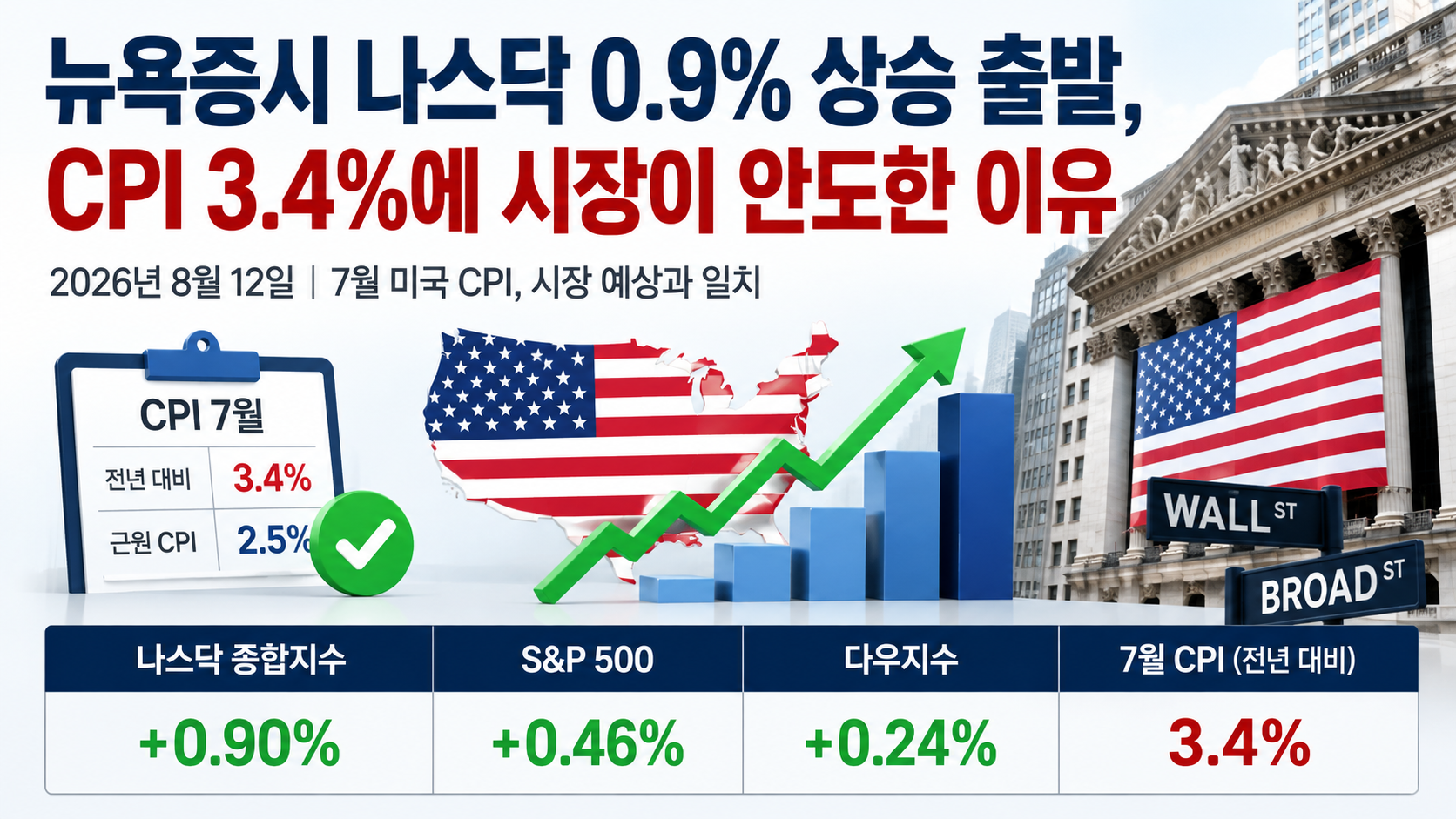
2026-08-12 Wall Street opened higher after the July U.S. Consumer Price Index (CPI) matched market expectations exactly. In early trading, the Nasdaq Composite rose approximately 0.9%, the S&P500 gained around 0.5%, and the Dow advanced about 0.2%, rebounding from the previous day's broad-based decline.
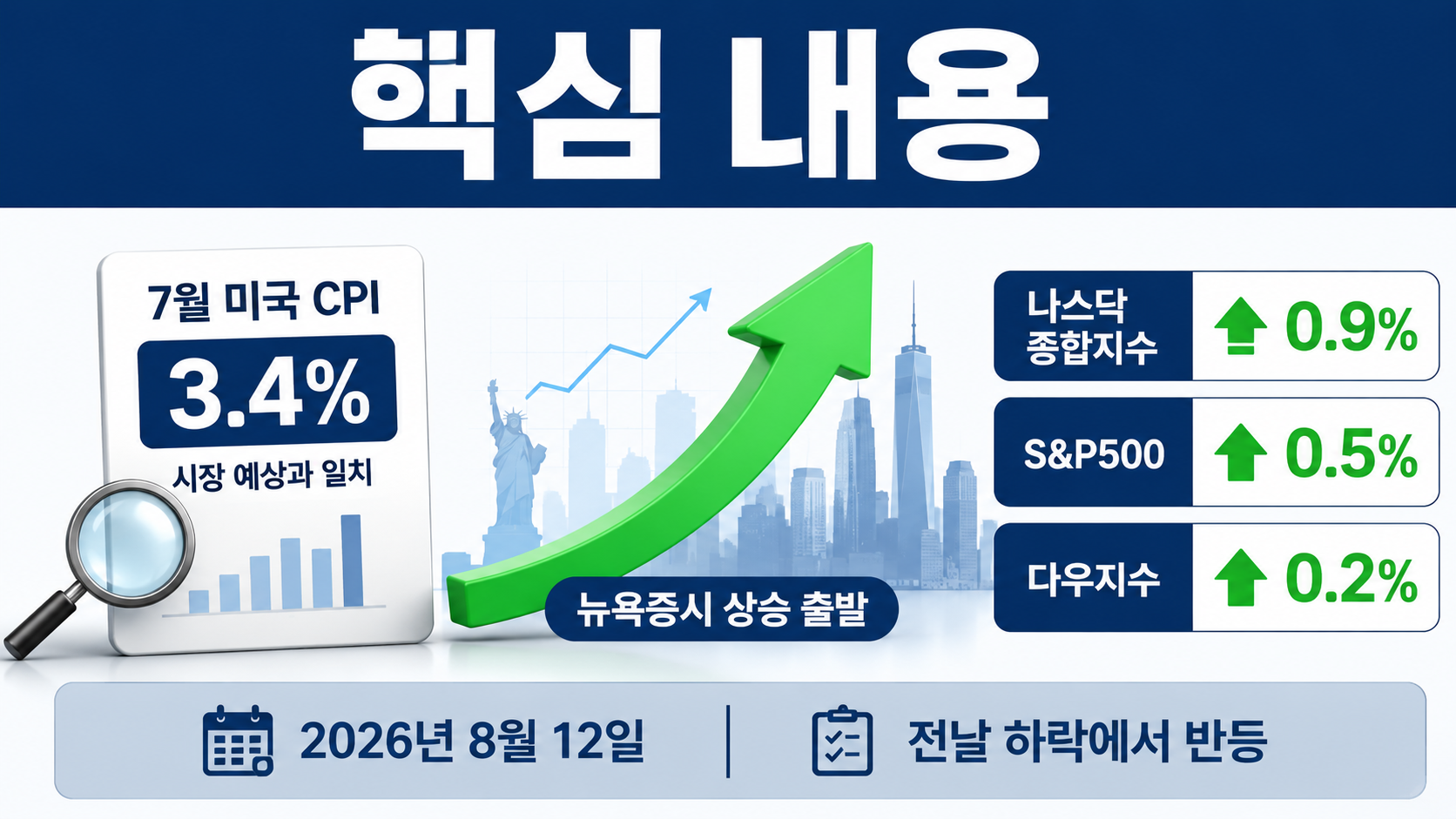
The key was not a sharp decline in inflation. Higher-than-expected inflation could have intensified concerns about additional monetary tightening by the Federal Reserve (Fed). The reduced likelihood of that scenario provided a positive catalyst for stocks.
However, U.S. markets are still trading during the morning session on 12, local time. The index movements described below are not closing figures, and the extent of the gains may change depending on Treasury yields, international oil prices, and comments from Federal Reserve officials.
Why Wall Street Found Relief in the July CPI Reading of 3.4%
The July U.S. Consumer Price Index rose 0.1% from the previous month and 3.4% compared with 1 a year earlier. Core CPI, which excludes volatile categories such as food and energy, increased 0.2% month over month and 2.5% year over year.
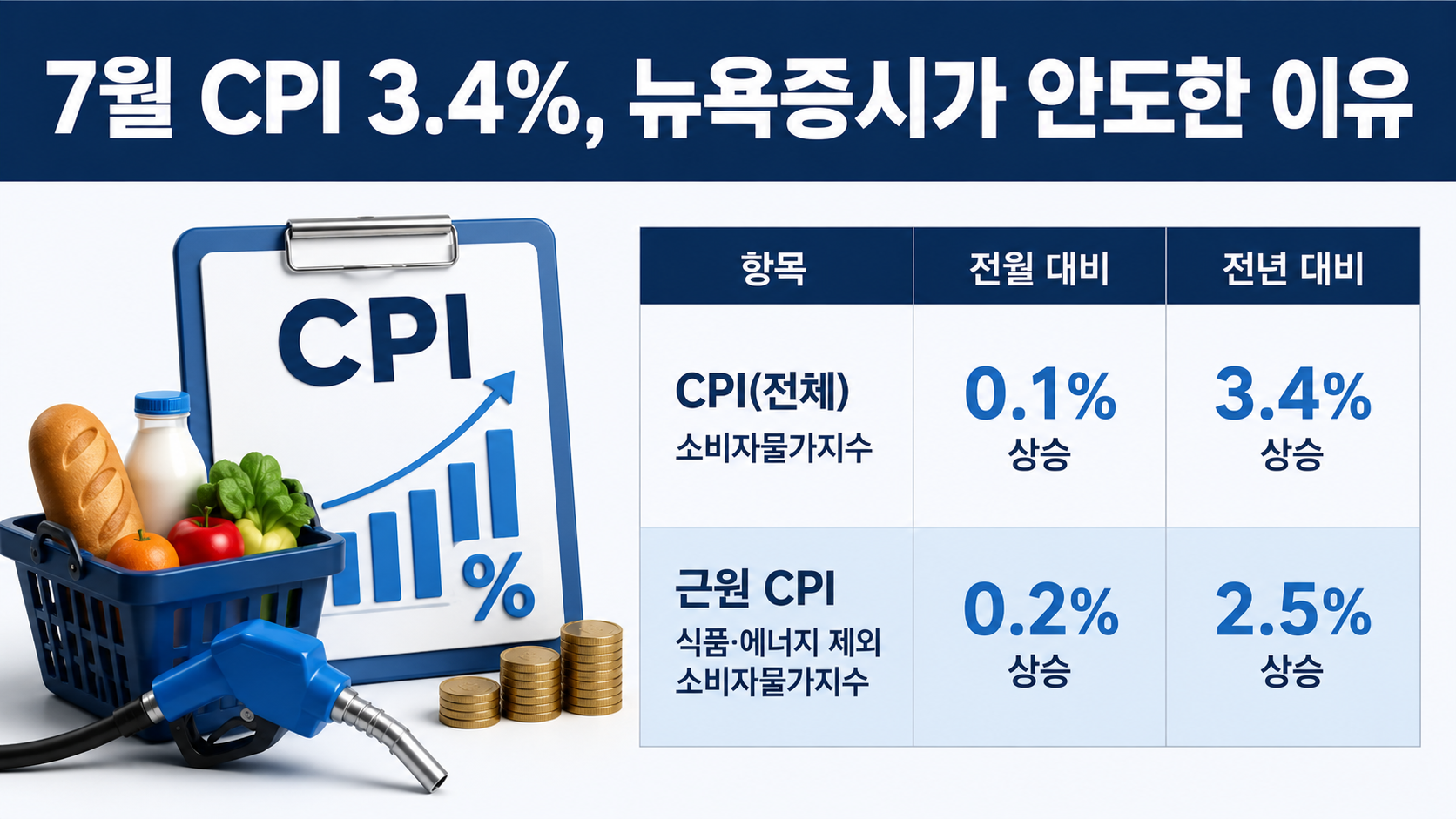
All four figures matched market expectations.
For stock investors, the more important question is not whether 3.4% represents low inflation, but whether inflation was higher than expected. Financial markets respond not only to the reported figures themselves but also to differences between actual results and expectations already reflected in stock and bond prices.
Compared with June, the year-over-year headline CPI inflation rate declined from 3.5% to 3.4%, a decrease of 0.1% percentage points. Core CPI also fell from 2.6% to 2.5%, a decline of 0.1% percentage points.
According to the author's calculation, the relative slowdown in the headline CPI inflation rate is approximately 2.9%, calculated as `(3.4-3.5)÷3.5×100`. However, this does not mean that the overall price level fell by 2.9%. It measures the relative decrease in the year-over-year inflation *rate* from 3.5% to 3.4%.
More importantly, inflation remains elevated. It would be difficult to conclude that the inflation problem has been resolved based solely on the headline CPI figure of 3.4%. The latest report is better understood as showing no immediate signs of a sharp resurgence in inflation.
Why the Nasdaq Outperformed with a 0.9% Gain
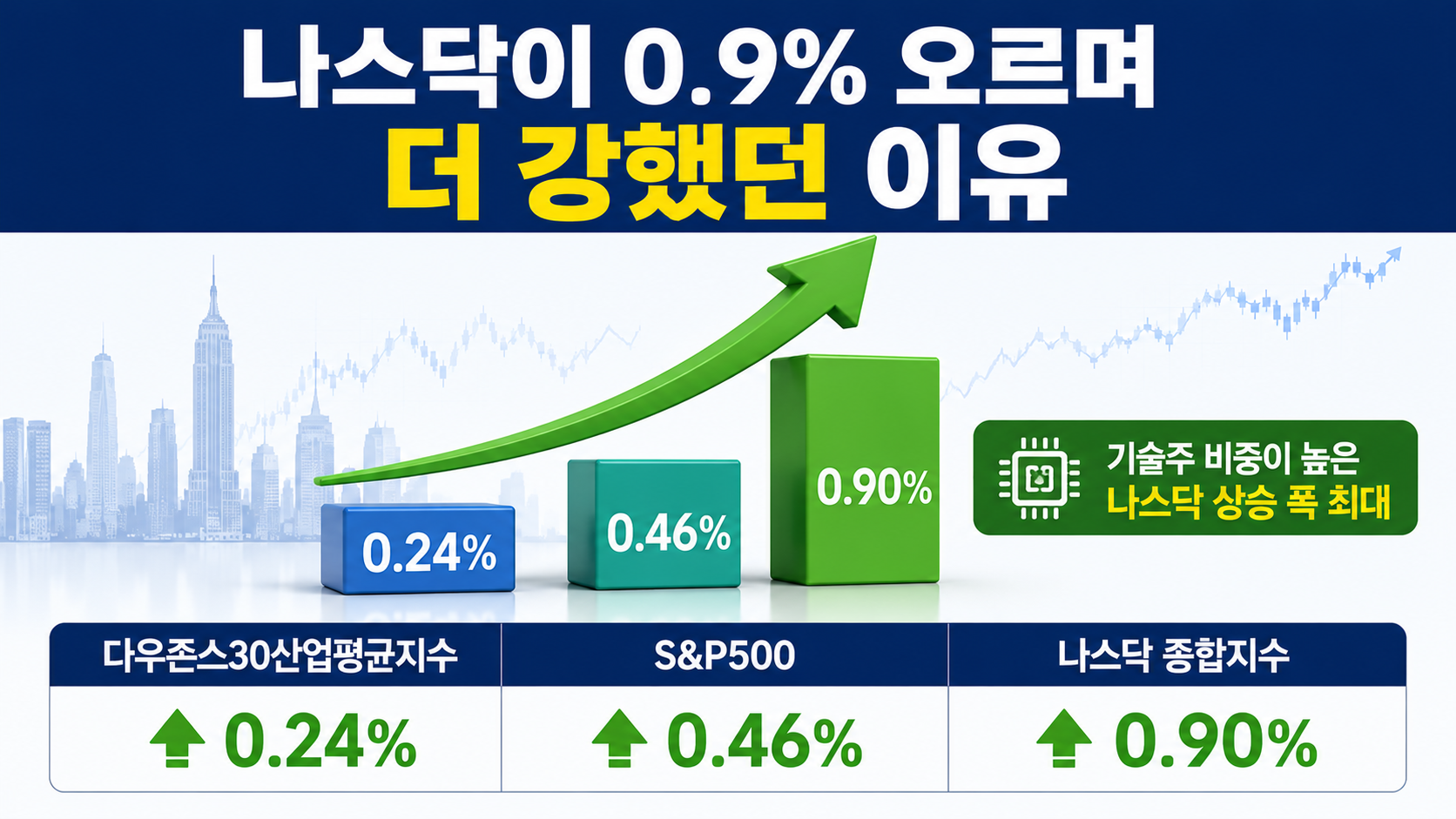
Immediately after Wall Street opened on 12, the Dow Jones 30 Industrial Average rose approximately 0.24% from its previous close, the S&P500 gained 0.46%, and the Nasdaq Composite advanced 0.90%. All three major indexes climbed, but the technology-heavy Nasdaq recorded the largest gain.
Inflation and interest-rate expectations directly influence the valuations of growth stocks.
For technology companies whose share prices reflect substantial expectations of future earnings, higher market interest rates reduce the present value of future cash flows. Conversely, when inflation stays within expectations and the risk of rising interest rates eases, highly valued growth stocks may respond more strongly.
The latest CPI report partially relieved that pressure.
Before the July CPI release, the scenario investors feared most was an inflation reading above expectations that would increase the likelihood of further Fed tightening. When the actual figures matched forecasts, some positions reflecting that risk were unwound, allowing the technology-heavy Nasdaq to outperform.
However, this should not be interpreted as a fixed formula in which 'CPI 3.4% = technology stocks rise.' Even with an identical CPI reading, stock market reactions can differ depending on Treasury yields, corporate earnings, international oil prices, and expectations already priced into the market.
Why Market Sentiment Changed Just One Day After the Decline
On August 11, Wall Street declined, with the Dow falling 0.34%, the S&P500 losing 0.32%, and the Nasdaq dropping 0.60%. The S&P500 closed at 7,728.20, the Dow at 53,791.85, and the Nasdaq Composite at 26,445.45.
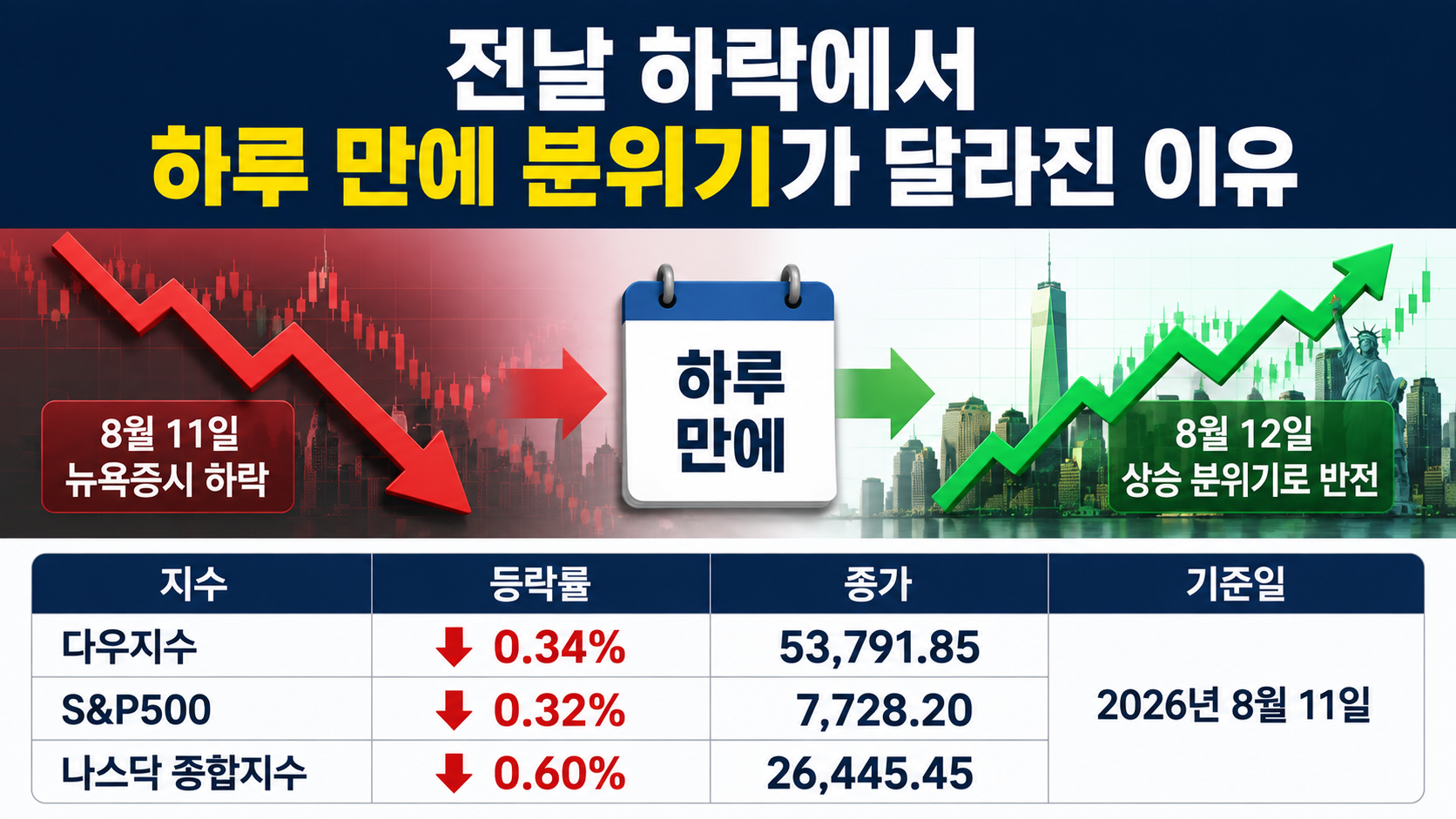
At the time, markets faced two simultaneous sources of pressure.
The first was the July CPI report scheduled for release the following day. Investors were concerned that higher-than-expected inflation could push the Fed's interest-rate outlook in a more hawkish direction.
The second was international oil prices. If geopolitical uncertainty caused oil prices to rise again, higher energy costs could feed into consumer prices and disrupt the inflation slowdown already underway.
When the CPI reading matched expectations on 12, some of the first source of uncertainty disappeared. While investors had priced in the possibility of an unexpectedly high inflation reading the previous day, they now had confirmation that there had been no major upside inflation surprise.
The previous day's decline and the current day's gains therefore do not necessarily contradict each other. The information driving market prices changed within a single day.
CPI Matching Expectations Does Not Settle the September Interest-Rate Decision
It would be premature to conclude that the September U.S. interest-rate decision has been determined by this CPI report alone. The Federal Reserve considers employment, economic conditions, and financial conditions alongside inflation.
The current U.S. benchmark interest-rate range is 3.50~3.75%. Immediately after the July CPI release, interest-rate futures markets still favored keeping rates unchanged at the September Federal Open Market Committee (FOMC) meeting, although expectations had not shifted entirely in one direction.
There is an important distinction here.
'Inflation has slowed' does not mean 'the Fed will cut interest rates soon.' The central debate is whether inflation is moving sufficiently toward the Fed's target and whether additional monetary tightening is necessary.
The July headline CPI reading of 3.4% and core CPI reading of 2.5% were lower than the previous month's figures, but neither indicates that inflationary pressure has disappeared completely. In particular, another sharp rise in international oil prices could put renewed pressure on future inflation readings through energy costs.
Therefore, the day's stock market gains are more accurately interpreted as relief from avoiding a worse-than-expected inflation shock than as evidence that the interest-rate problem has been resolved.
The Next Key Indicator for Wall Street Is the August 13 PPI Report
The next inflation indicator to watch after the CPI release is the July U.S. Producer Price Index (PPI). It is scheduled for release at 8:30 a.m. U.S. Eastern Time on August 13.
In South Korea, the release will be available later that same day, during the evening.
While CPI measures changes in prices consumers actually pay, PPI tracks changes in selling prices at the producer level. The two indicators do not always move in exactly the same direction, but stronger price pressures at the production stage can provide useful information about future corporate costs and consumer prices.
The PPI report carries particular significance this time because CPI matched expectations almost exactly.
If PPI also indicates easing inflationary pressure, the relief rally could continue. Conversely, if producer prices are stronger than expected, investors may conclude that consumer inflation has stabilized while cost pressures on businesses remain.
Retail sales and additional employment and inflation indicators will also matter. The September FOMC meeting is scheduled for September 15–16, giving the Federal Reserve time to evaluate further economic data before making its decision.
Korean Investors Should Watch More Than the Nasdaq's Percentage Change
Investors holding U.S. technology stocks or monitoring Korean semiconductor and growth stocks would be better served by watching U.S. 10-year Treasury yields and international oil prices alongside the Nasdaq's performance.
The first indicator is the U.S. 10-year Treasury yield.
Even if stocks rise after the CPI release, a rapid rebound in Treasury yields during the session could weigh on growth stocks. Technology companies with particularly high valuations may be especially sensitive to interest-rate changes.
The second indicator is international oil prices.
Energy price fluctuations have recently had a substantial impact on U.S. inflation. The June CPI fell 0.4% month over month, with declining energy prices playing a major role at the time. A stable July CPI reading does not eliminate the risk of future energy-driven inflation.
The third indicator is market breadth.
The nature of an index rally depends on whether gains are concentrated in a handful of large technology companies or buying spreads across semiconductors, software, financial stocks, and small- and mid-cap companies. Even when the headline index performance is identical, underlying market strength can differ.
Finally, investors must distinguish between different observation times. 23:27 on August 12 Korean time falls during regular U.S. trading hours. A Nasdaq gain of 0.9% early in the session does not guarantee that the index will close with the same increase.
How Should Investors Interpret Wall Street Right Now?
The early-session rebound on 2026-08-12 is better characterized as an 'uncertainty-relief rebound' after the July CPI avoided exceeding expectations, rather than an 'inflation surprise rally' driven by unexpectedly low inflation.
Headline CPI stood at 3.4% year over year, while core CPI was 2.5%. Both readings matched market forecasts. As a result, the Nasdaq rose approximately 0.9% shortly after the opening bell, outperforming the Dow and S&P500.
However, the inflation rate of 3.4% cannot automatically be considered low. International oil prices could rise again, and the Fed's September policy decision remains ahead.
The sequence of indicators to monitor during the session is therefore straightforward. First, check whether the intraday gains across Wall Street's 3 major indexes are sustained. Next, assess whether U.S. Treasury yields and international oil prices support those movements. Finally, the July PPI report scheduled for August 13 should provide a clearer indication of whether the market's interest-rate expectations following the CPI release will hold.
The current gains are confirmed, but today's closing levels and the direction of the next trading session remain uncertain. Investors should distinguish intraday index movements from confirmed economic data when making decisions.
The financial safety wording and presentation of direct calculations in this article follow the provided editorial operating standards. The CPI figures and intraday market reactions are based on the latest verified materials, while the September FOMC meeting is scheduled for September 15–16. The July PPI report is scheduled for 8:30 a.m. U.S. Eastern Time on August 13.
※ This article is provided for informational purposes to help readers understand market developments and does not constitute investment advice or a recommendation to buy or sell any particular stock or asset. All investment decisions and associated responsibilities rest with the individual investor.