

Nasdaq100 Futures Fall 1.6% Before the New York Stock Market Opens: What to Watch Ahead of the September 16 FOMC Meeting
이 포스팅은 쿠팡 파트너스 활동의 일환으로, 이에 따른 일정액의 수수료를 제공받습니다.
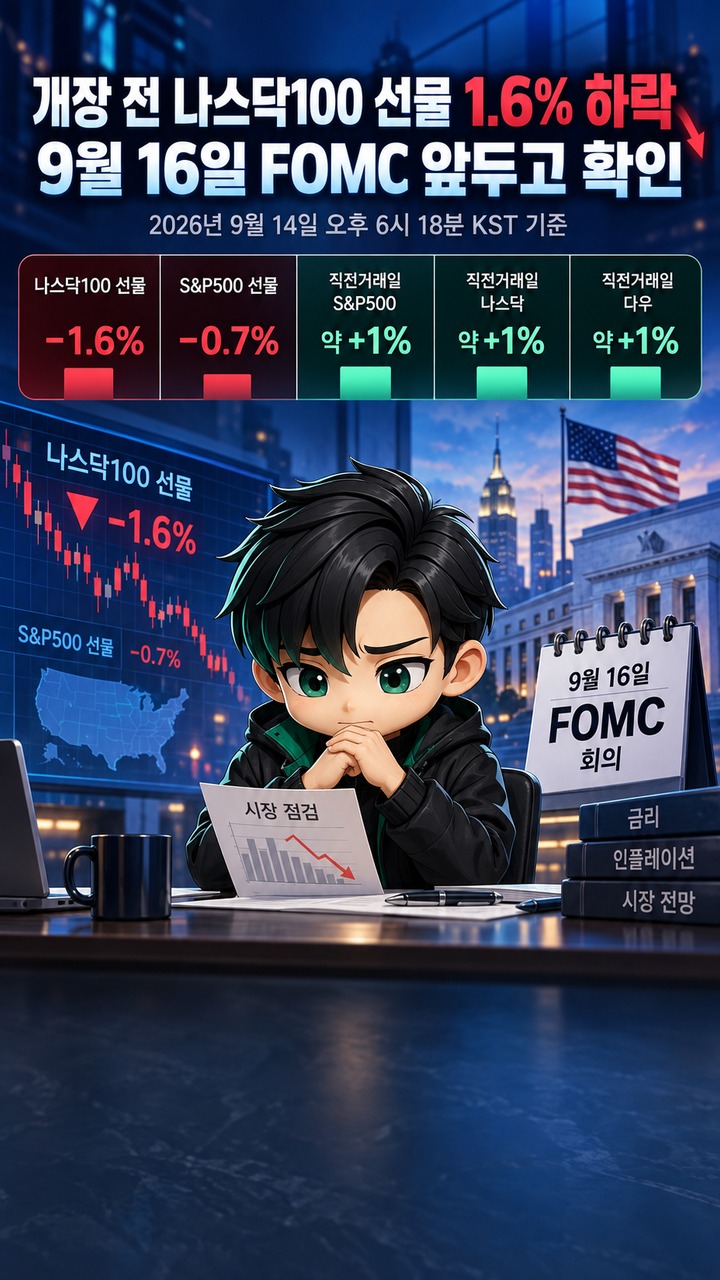
2026-09-14 at 6:18 p.m. Korea time, the New York stock market has not yet opened for regular trading. On the previous trading day, September 11, the S&P500, Nasdaq, and Dow all rose by approximately 1%. However, sentiment weakened again before today's opening, with Nasdaq100 futures falling 1.6% and S&P500 futures declining 0.7%.
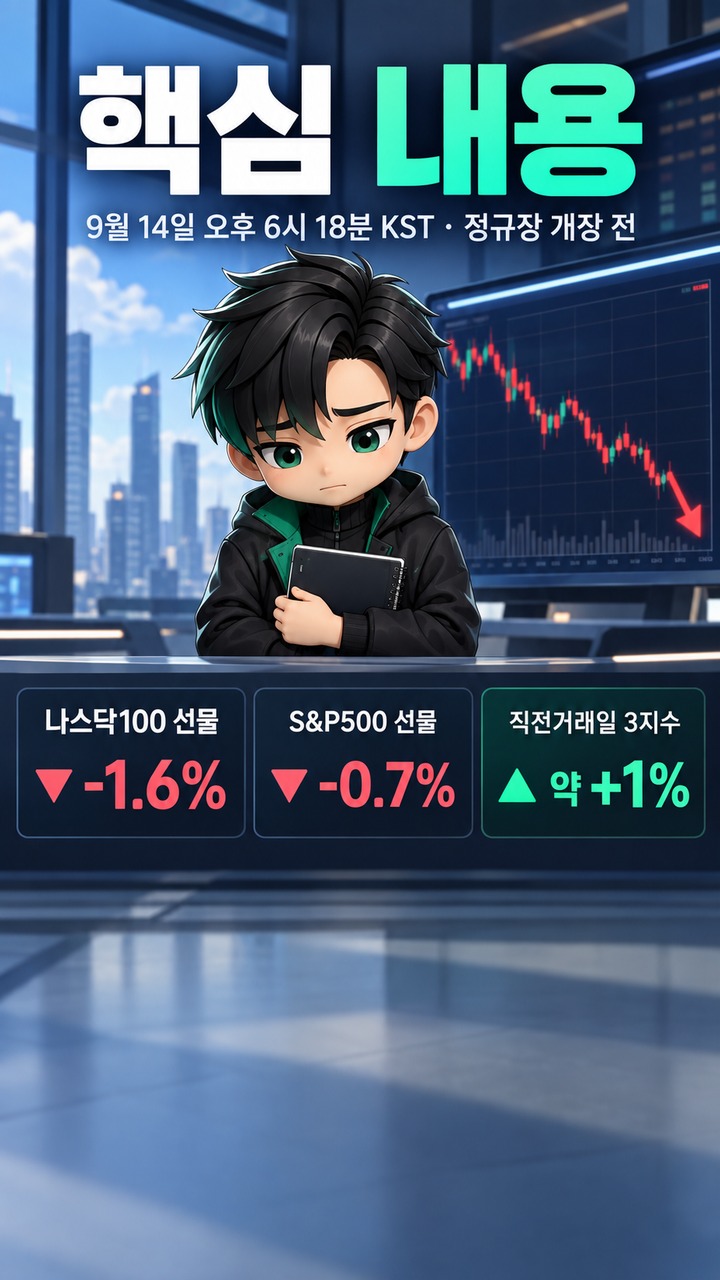
Therefore, the key question now is not simply that 'U.S. stocks rose last Friday.' Instead, investors should watch whether weakness in futures carries over into the actual cash market during Monday's regular session and how interest rate expectations change ahead of the Federal Open Market Committee (FOMC) meeting scheduled for 15–16, September.
How Much Did U.S. Stocks Rise Last Friday?
On September 11, the S&P500 closed at 7,656.98, up 0.86%. The Nasdaq Composite gained 0.96% to finish at 26,333.04, while the Dow Jones Industrial Average rose 0.98% to close at 52,573.29.

Although all three indexes advanced, their performance over the full week told a different story. The S&P500 fell 0.8% for the week, while the Nasdaq declined 0.7% and the Dow dropped 1.6%.
In other words, Friday's rebound alone might suggest a strong recovery, but looking at the entire week shows that the major indexes had not yet recovered all their earlier losses.
Why Did the Market Weaken Again Before Monday's Opening?
Before the U.S. regular trading session opened on September 14, Nasdaq100 futures fell 1.6%, while S&P500 futures declined 0.7%. Dow futures also dropped 81 points, or approximately 0.2%.
One particularly notable development was that Nasdaq100 futures, which have a heavy concentration of technology stocks, experienced a larger decline than S&P500 and Dow futures.
Pre-market futures prices are not regular-session closing prices. They do not establish that U.S. stocks will fall by the same amount, and prices can continue changing before and after regular trading begins.
Therefore, when monitoring the New York stock market on September 14, investors should look beyond the fact that futures have declined and first determine whether the Nasdaq's relative weakness persists after the market opens.
Why Is the FOMC Important This Week?
The Federal Reserve's next FOMC meeting is scheduled to take place from 2026-09-15 through 16.
Recently, markets have been pricing in a higher probability of an interest rate increase at the September meeting than before. Goldman Sachs revised its previous forecast of unchanged rates and now expects an increase of 0.25% points at the September meeting. JPMorgan also forecasts an increase of 0.25% points in September.
However, market expectations must be distinguished from the Federal Reserve's actual decision. As of September 14, the decision for the September FOMC meeting has not yet been announced, and a rate increase is not confirmed.
This week, rather than focusing solely on whether rates are raised, investors should examine both the actual decision and the signals provided about the future direction of monetary policy.
Are Friday's Gains and Monday's Futures Declines Contradictory?
The two movements are not contradictory because they represent prices at different points in time.
The closing prices on September 11 reflect the results of Friday's completed regular trading session. By contrast, futures prices on September 14 reflect new information and expectations incorporated after the weekend, before the market opens.
It is therefore easier to understand current market conditions by separating three distinct periods.
September 11 regular session: S&P500 +0.86%, Nasdaq +0.96%, Dow +0.98%
Week ending September 11: S&P500 -0.8%, Nasdaq -0.7%, Dow -1.6%
Before the opening on September 14: Nasdaq100 futures -1.6%, S&P500 futures -0.7%, Dow futures approximately -0.2%
This explains how a daily gain, a weekly decline, and a futures decline ahead of the next trading session can all occur at the same time.
What Should Investors Watch First in Today's U.S. Stock Market?
The first is the Nasdaq. Since the technology-heavy Nasdaq100 experienced the largest relative decline in pre-market futures trading, it is important to check whether that difference persists during the actual regular session.
The second is the S&P500. Whether the index, which rebounded to 7,656.98 on September 11, falls again during Monday's session or instead narrows its pre-market losses could serve as an indicator of the broader market's direction.
The third is changing expectations for the FOMC. The Federal Reserve meeting is scheduled for 15–16, September, so it would be difficult to determine the direction of the entire week based solely on market movements on September 14.
To summarize the developments confirmed so far, the 3 major U.S. stock indexes rebounded on Friday, but Nasdaq futures in particular weakened again before Monday's opening. The next major event for markets this week is the FOMC meeting scheduled for 15–16, September.
Stock prices and stock index futures fluctuate continuously throughout trading. Pre-market figures do not represent regular-session closing prices, and the historical performance of any particular index does not guarantee future returns.
※ This article is provided for informational purposes to help readers understand market developments and does not constitute investment advice or a recommendation to buy or sell any particular security or asset. Final investment decisions and responsibility rest with the individual investor.
Related Articles
How Much Did U.S. Stocks Rise on September 11?
이 포스팅은 쿠팡 파트너스 활동의 일환으로, 이에 따른 일정액의 수수료를 제공받습니다.