

Kim Yo Jong Mocks South Korea Over UFS Reduction, Calling Its Situation 'Pitiable'…What Did She Say?
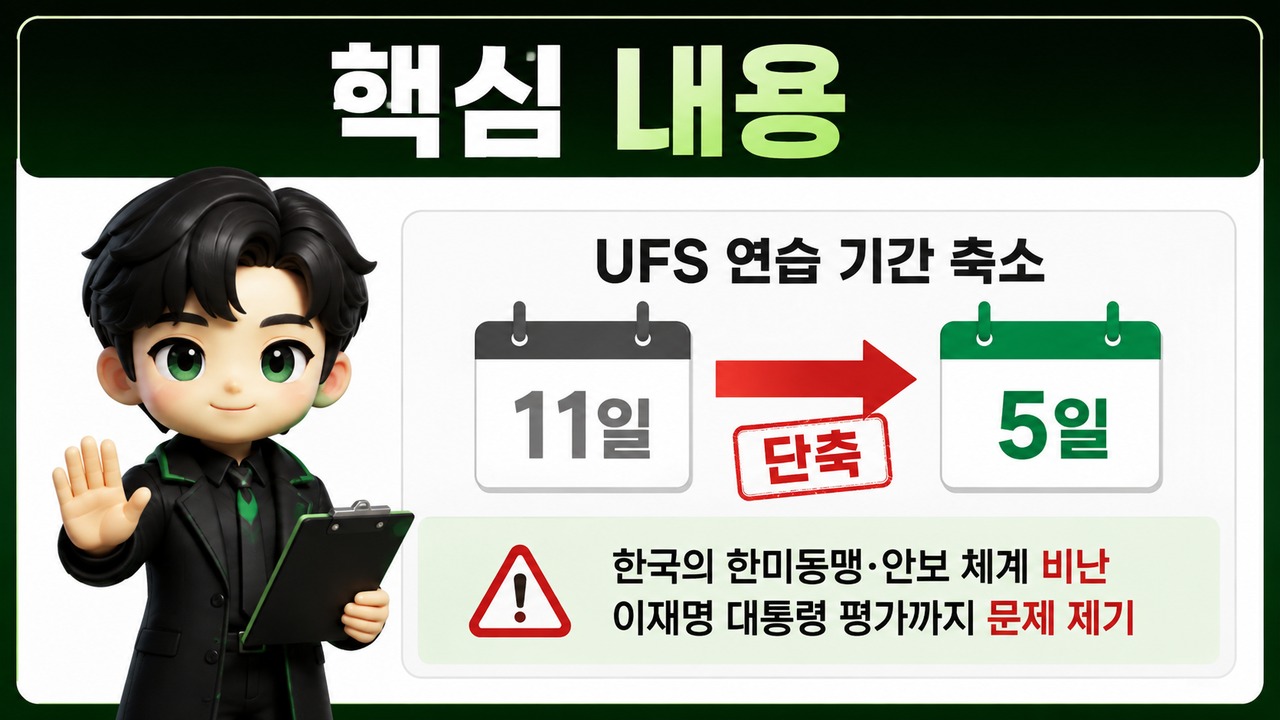
On the night of 2026-08-20, Kim Yo Jong, director of the General Affairs Department of North Korea's Workers' Party, issued harsh criticism and mocking remarks directed at South Korea over the reduction of the South Korea-U.S. joint military exercise Ulchi Freedom Shield (UFS). Her central argument was that the reduction of UFS from its originally scheduled 11 days to 5 days exposed weaknesses in South Korea's alliance with the United States and its security structure. She also directly challenged President Lee Jae Myung's assessment of the decision.

The latest statement followed remarks Kim Yo Jong made the previous day, when she said North Korea would attach no particular significance to the U.S. decision to scale back UFS. In her August 20 statement, her language was more directly aimed at South Korea than at the United States.
How Did Kim Yo Jong Mock South Korea?
In a statement released on the night of August 20, Kim Yo Jong referred to the reduction of UFS following instructions from U.S. President Donald Trump. She criticized Seoul by suggesting that it could no longer properly conduct its usual 'war games.' The title of her statement itself described South Korea's situation as 'pitiable.'

In the statement, she argued that a single decision by President Trump had forced South Korea to reduce its joint military exercises. She emphasized how significantly the drills had been scaled back from their original plan, using expressions equivalent to 'half-baked' and 'an empty shell.'
The Korean word 'gageunghada' (가긍하다) means pitiable or deserving of sympathy. Therefore, the phrase 'Kim Yo Jong's mockery' appearing in searches refers not simply to one sentence but, more accurately, to the broader context of her August 20 statement, in which she used the UFS reduction to disparage South Korea's security structure and its alliance with the United States.
Kim Yo Jong also argued that the reduction in military exercises revealed South Korea's security circumstances. Citing the change in the joint exercise schedule following a U.S. decision, she continued criticizing the relationship between the South Korean military and the South Korea-U.S. alliance.
However, these remarks represent North Korea's political claims. It is important to distinguish the actual scheduling changes to the joint military exercises from North Korea's interpretation of those changes.
How Much Was UFS Actually Reduced?
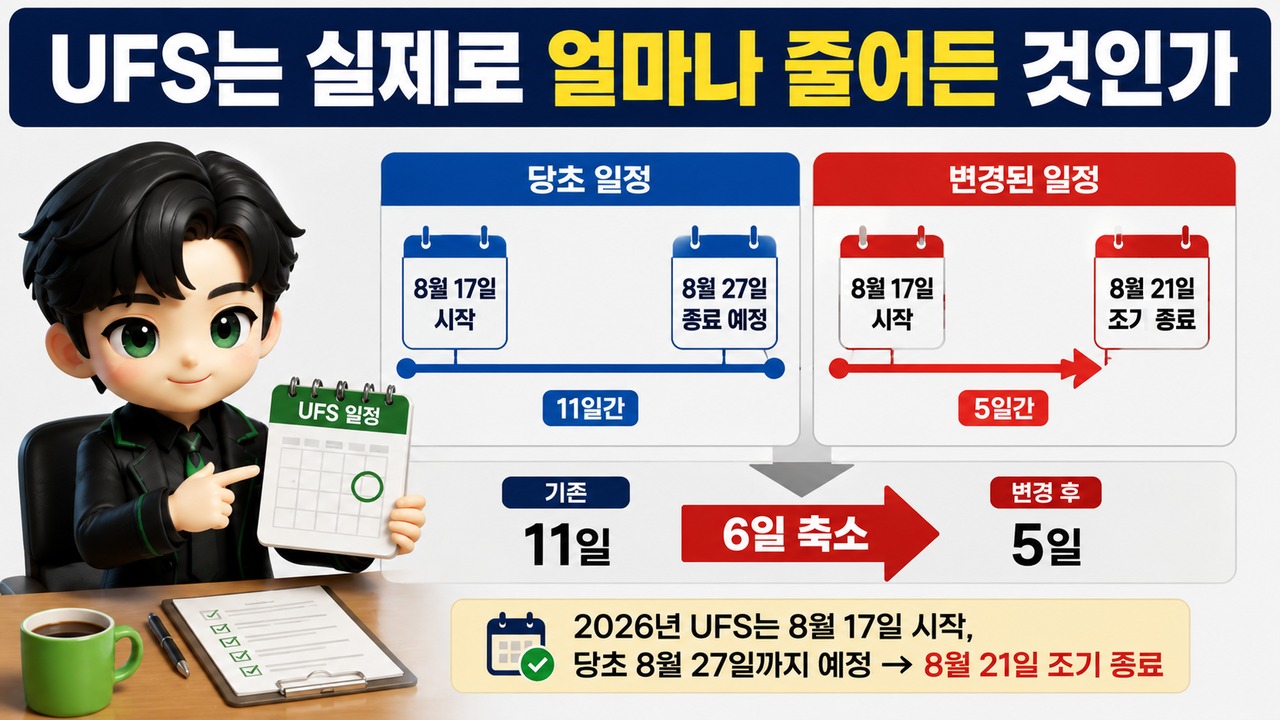
The controversy stems from an actual change to the UFS schedule. The 2026 UFS exercise began on August 17 and was originally scheduled to continue until August 27. However, it was confirmed that the revised schedule called for the exercise to end early on August 21.
In other words, the planned duration was shortened from 11 days to 5 days.
U.S. President Donald Trump instructed that American participation in UFS be substantially reduced. South Korean and U.S. military authorities subsequently adjusted the duration and scale of the exercise. Some field maneuver drills were reduced, while the U.S. Department of Defense explained that certain exercises had been canceled or converted to simulation-based formats.
This does not mean UFS was canceled in its entirety. Because the changes involved a shorter duration and reductions to certain exercises, a distinction must be made between a 'suspension of UFS' and a 'reduction of UFS.'
Kim Yo Jong's latest statement specifically used the schedule change from 11 days to 5 days as its central subject. Accordingly, rather than interpreting related reports as meaning that South Korea-U.S. joint military exercises had disappeared altogether, it is more accurate to understand that the duration and some components of an ongoing joint exercise were substantially reduced.
Why Did She Directly Mention President Lee Jae Myung?
Kim Yo Jong also mentioned President Lee Jae Myung by name in her statement. She criticized Lee's assessment of President Trump's decision to reduce UFS as an effort to create conditions for dialogue on the Korean Peninsula, describing his position as 'double-dealing words and actions.'
President Lee had previously expressed the view that Trump's decision could be understood as reflecting his willingness and efforts to create conditions for dialogue with North Korea.
North Korea, however, stated that reducing the scale or duration of UFS would not change its existing position on the joint military exercises themselves. In remarks released the previous day, August 19, Kim Yo Jong said she had no interest in the reduction of the exercise's scale and duration, maintaining that scaling down the drills did not change their fundamental nature.
On August 20, she went further by criticizing the South Korean government's positive assessment of the U.S. decision itself.
Therefore, what the latest statement establishes is that while the South Korean government viewed the exercise reduction partly as an effort to create conditions for dialogue, North Korea rejected that interpretation and instead criticized the South Korean government.
How Did This Differ From Her Statement Directed at the United States the Previous Day?
Kim Yo Jong issued statements concerning the South Korea-U.S. joint military exercises on two consecutive days, August 19 and 20, but the emphasis differed.
On 19, she attached little significance to the U.S. decision to reduce UFS itself. She maintained that shortening the duration or reducing the scale of the exercises would not alter what North Korea considers to be their fundamental nature.
She also made remarks suggesting that the personal relationship between North Korean leader Kim Jong Un and President Trump remained good. At the same time, she said she was unaware of the recent communication between the North Korean and U.S. leaders that Trump had mentioned.
In her statement on the night of 20, the focus shifted to South Korea.
She argued that the reduction in military exercises demonstrated South Korea's dependence on its alliance with the United States, used disparaging language about the South Korean military, and directly challenged President Lee Jae Myung's response.
Taken together, the two statements make it difficult to conclude that North Korea welcomed the UFS reduction. North Korea did not assess the reduction positively, nor did it agree with the South Korean government's interpretation of the decision as a change in the environment for dialogue.
Conversely, the personal relationship between Kim Jong Un and Trump is a separate matter from whether a future North Korea-U.S. summit will actually take place. Based solely on the statements confirmed as of August 20, it is not possible to conclude that negotiations between North Korea and the United States have either resumed or collapsed.
How Should North Korea's Missile Launch Be Distinguished From Kim Yo Jong's Statement?
According to South Korea's Joint Chiefs of Staff, North Korea launched approximately 10 short-range ballistic missiles on the afternoon of August 20. The launches reportedly took place around 5 p.m. from the Pyongyang area, with each missile traveling approximately 300 km toward the East Sea.
Chronologically, the missile launches occurred first, followed by the release of Kim Yo Jong's statement criticizing South Korea later that night.
However, the fact that both events occurred on the same day does not, by itself, establish that the missiles were launched because of Kim Yo Jong's statement or that the launches were intended to carry out a specific message contained in her remarks. No evidence establishing such a direct connection has currently been confirmed.
This distinction is particularly important. North Korea's weapons launches and its statements concerning South Korea-U.S. joint military exercises share the broader context of military tensions on the Korean Peninsula. However, assigning an unverified direct causal relationship between them would go beyond the established facts.
South Korea's National Security Council (NSC) urged North Korea to stop launching ballistic missiles. The South Korean military also said it had shared relevant information with the United States and Japan and strengthened its surveillance posture.
What Developments Should Be Watched Next in the News About 'Kim Yo Jong's Mockery'?
As of the night of August 20, the most significant confirmed developments were the reduction in the South Korea-U.S. joint military exercise schedule and North Korea's successive public responses. However, it is too early to conclude that these developments have determined the future direction of North Korea-U.S. or inter-Korean relations.
First, UFS is scheduled to end early on August 21. After the exercise concludes, attention will turn to how the United States and South Korea adjust their additional military training schedules.
President Donald Trump has publicly expressed his willingness to meet Kim Jong Un again, but there has been no confirmation that a specific date and location for a summit have been finalized.
Kim Yo Jong has also stated that she is unaware of any actual recent communication between the North Korean and U.S. leaders, in response to President Trump's claims about such contact.
For these reasons, reducing the current situation to either 'a North Korea-U.S. summit has been confirmed' or 'North Korea has completely rejected dialogue' would be an interpretation that goes beyond the verified facts.
As of the night of 2026-08-20, three points can be established with confidence. The UFS schedule was shortened from its originally planned 11 days to 5 days; Kim Yo Jong did not welcome that change; and she subsequently issued a statement directly criticizing South Korea and President Lee Jae Myung.
To assess what happens next, it will be necessary to examine separately the additional military schedules of South Korea and the United States after UFS ends, any subsequent statements or military actions by North Korea, and whether President Trump's proposed meeting with Kim Jong Un develops into a concrete diplomatic engagement.